
Regular exercise offers many important benefits to our furry friends, not the least of which are greatly improved physical and mental fitness. If you own a dog and want to ensure it remains fit and healthy, you can create a customised exercise plan after reading this guide.
Although we focus primarily on the benefits of regular exercise for your dog, we also cover everything you need to know to devise an effective workout regimen for your pet: the best exercise for dogs, what counts as exercise for a dog, all the ways exercise affects dog health and more.


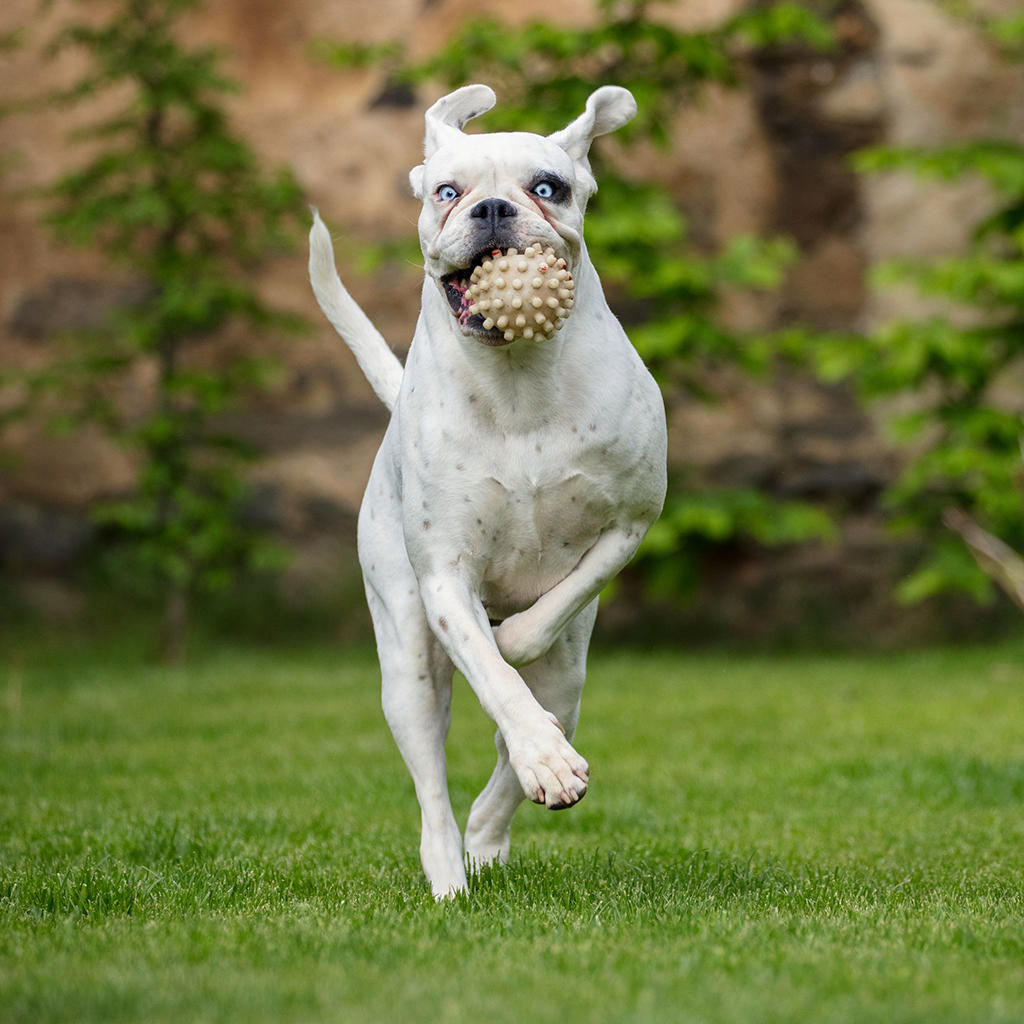
We’ve already mentioned how regular exercise improves physical and mental fitness levels, but it’s worth studying the benefits closely for a more detailed answer to the question: why is regular exercise important for dogs?
Once you realise just how beneficial regular exercise can be for dogs, you will be even more determined to ensure that your best friend always hits his or her daily workout target. If you do this, your canine companion will enjoy the following dog health benefits:
In the same way it helps human beings to keep hearts and major blood vessels healthy, aerobic exercise has a beneficial effect on the canine cardiovascular system as well.
Regular exercise promotes better gut health in canines, helping your faithful friend digest his or her food more efficiently.
Make sure your pet enjoys the best exercise for dogs of its breed, and lower blood pressure will be one of the potential benefits
Dogs that don’t get enough exercise are frequently bored and may misbehave more frequently as a consequence. In addition to improving dog health, regular exercise can improve canine behaviour.
A dog that doesn’t have the opportunity to take all the exercise it needs may become listless and depressed. By increasing the frequency and/or intensity of your dog’s exercise sessions, you can have a beneficial effect on its mental health.
Exercise helps build muscle, which in turn will help your pet burn more calories and stay in shape. With obesity becoming an increasingly common dog health issue in Australia, a little extra muscle always comes in handy.
Keep your dog moving, and its joints will have a much better chance of retaining their full range of motion as it ages.
With all these key benefits of regular exercise for your dog, you can see why it’s so important to ensure that your loyal friend always sticks to a well-thought-out pet fitness plan.
If you want to know what counts as exercise for a dog, the answer is any activity that raises its heart rate, i.e. any aerobic activity. Technically, even gentle play with you and other family members at home counts as exercise. However, if you want to know what counts as effective exercise and is likely to improve dog health, we find it easier to only count those times when your pet has the opportunity to really burn off some energy, such as when on a walk in the country or running around a large backyard. It’s also important to realise that what counts as effective exercise for one dog may not be effective for another.
To determine whether a specific activity counts as an effective exercise for your dog, you must consider its breed, age and current health. For example, a healthy, young adult gundog in prime condition will require longer and more challenging exercise sessions than a toy poodle of advanced years (you should also include activities designed to improve your dog’s mental health in its regular fitness routine). See the next section for examples of the best exercise for dogs based on breed and age.
When searching for suitable activities to improve your pet’s health, first consider its breed, age and current physical condition.
Puppies tend to have many small bursts of energy throughout the day, and activities that are designed with this in mind tend to be the best exercise for dogs of this age. A vigorous run around the backyard for 10 minutes is more suitable than an afternoon walk in the countryside where puppies are concerned.
The best exercise for dogs that are fully grown adults depends primarily on the breed and condition of the animals in question. A Toy Poodle in peak condition needs an hour of exercise a day, which could comprise 3 separate 20-minute walks to avoid unnecessary strain on small joints. An adult German Shepherd in good condition will need roughly twice as much exercise and will enjoy longer walks.
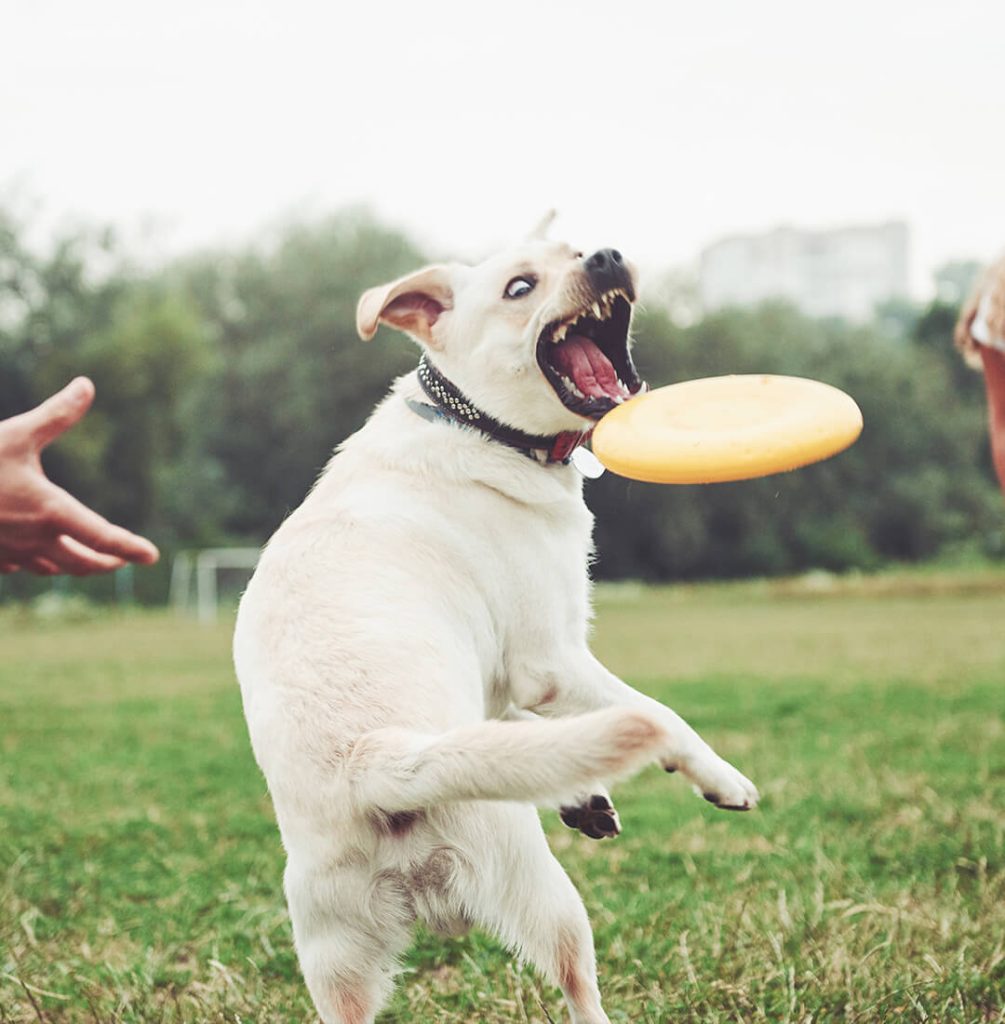
Playing fetch can provide a dog with an excellent cardiovascular workout, so it definitely counts as good exercise. Also, it doesn’t require you to work up a sweat at the same time so it’s a great option for those times when you just don’t have the energy to take your dog for a run in the country. However, before you get started on a vigorous game of fetch, make sure your pet does not have any existing dog health conditions that might prevent it from safely enjoying this activity.
If your dog displays any of the following physical or behavioural symptoms, it could be a sign that it needs more exercise.
If you notice any of these signs, we recommend consulting an expert and creating a custom fitness routine for your furry friend without delay.
If you would like to create a custom dog health and exercise plan for your pet, you can work from these general guidelines for adult dogs of various types:
Breeds like German Shepherds, Golden Retrievers and Springer Spaniels normally require 60-120 minutes of energetic exercise daily, depending on their size and age.
These dogs need 60 minutes of the best exercise for dogs every day, perhaps slightly less for the smallest breeds.
Different breeds in this category have different needs. A greyhound is normally happy with 30-60 minutes of walking on a lead as long as it is let off and allowed to run free for a few minutes here and there. A beagle, on the other hand, needs as much exercise as a sporting dog to stay in good health.
Most dogs in this category, such as toy poodles, will be happy with one or two walks and the opportunity to run around a few times a day.
Flat-nosed dogs should take their exercise in short sessions to avoid respiratory issues. A couple of brisk walks, totalling 30-60 minutes daily, is normally enough for these breeds.
If you own a Great Dane or Irish Wolfhound, we recommend a total of 45 minutes of exercise daily. Walking rather than running is usually better as it helps avoid dog health issues such as arthritis in later life.
Don’t forget to adjust exercise times and intensity if your dog is a senior pet or considerably less fit than the average canine.
If you research the best exercise for dogs and adjust each recommendation to suit your pet’s age and physical condition, you can create an effective fitness plan for your loyal companion. With regular exercise, your pet will enjoy a better quality of life and probably a longer life. However, it’s important not to overdo it. Make sure your loyal friend is taking the new regimen in his or her stride and adjust accordingly if you spot any signs of overexertion, such as lethargy, respiratory distress, sore paws, heat exhaustion or excessive drooling.


In addition to regular exercise, your dog may benefit from our professional daycare service in Sydney, NSW. Many pets suffer from separation anxiety when left at home all day, but when they join our group, this anxiety disappears.
Other services we offer include grooming and boarding. Whichever service you’re interested in, we invite you to make a booking via our website. We’ll care for your pet as if it were our own.


Additional Services/Fees
Please Note *Prices are subject to change and should be used as a guide only*
Nail trims requiring 2 staff: $25
Please note we reserve the right to refuse service if deemed unsafe to the groomer or dog. We reserve the right to charge for the work that is completed
Terms and Conditions